
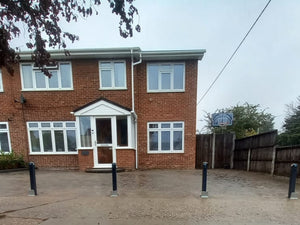
Short answer: if a stranger parks on your driveway they are trespassing — which is a civil matter, so the police will not usually remove them, and you must not clamp, tow or block the car in yourself (that is a criminal offence under the Protection of Freedoms Act 2012). If a car is parked on the road across your dropped kerb, that is the council's business and they can ticket it. And if a neighbour blocks a shared driveway you have a right of way over, the test is whether the obstruction "substantially interferes" with your access — if it does, you can force its removal through the courts. The only reliable way to stop it happening again is a lockable bollard inside your own boundary.
We are Bison Products of Swadlincote, Derbyshire, and we have supplied and fitted driveway bollards since 1972. This is the situation our customers ring us about most often — usually after they have already tried the police, the council and a note under a windscreen wiper. Here is where each of those actually gets you. General guidance, not legal advice.
Someone has parked on my driveway
Your driveway is private land. Driving onto it without permission is trespass — a civil wrong, not a crime. That has three consequences most people find surprising:
- The police will normally not remove the car. Forces across the UK say the same thing: it is a civil dispute. They may attend if there is a breach of the peace, or if the vehicle is untaxed, uninsured, stolen or abandoned — all worth checking, because those are actionable.
- You cannot clamp it, tow it or box it in. Since 1 October 2012, immobilising, moving or restricting the movement of a vehicle on private land without lawful authority is a criminal offence under section 54 of the Protection of Freedoms Act 2012. Blocking the offender in with your own car counts. Do not do it — you would be the one committing the offence.
- The remedy is civil. You can claim for trespass, and a court can order removal, but you have to show loss and it is slow and expensive for a one-off. Realistically: photograph it with a timestamp, note the registration, keep a log if it repeats, and ask the council whether the vehicle qualifies as abandoned.
Someone is blocking me in from the road
This is a different situation with better options, because the car is on the public highway rather than on your land.
- Parked across your dropped kerb. In a special enforcement area — which covers most of England outside London too — parking on the carriageway adjacent to a dropped footway is prohibited by section 86 of the Traffic Management Act 2004, and the council's civil enforcement officers can issue a penalty charge notice. Report it to your council's parking enforcement team, not the police. Highway Code rule 243 also tells drivers not to park where a kerb has been lowered.
- Genuine obstruction of the highway. Wilfully obstructing free passage along a highway without lawful authority is an offence under section 137 of the Highways Act 1980 — a police matter, though in practice they reserve it for real obstructions rather than inconvenience.
- Blocked in on your own drive. Frustrating but weak legally if the offending car is legally parked on the road: there is no general right to drive off your property at will across a public highway. Prevention beats enforcement here.
My neighbour is blocking a shared driveway
If your title includes a right of way over the driveway — check your Land Registry title plan and the deeds — the landowner cannot substantially interfere with it. Gates, chains, parked cars and, yes, bollards can all amount to interference.
The legal test is substantial interference: the obstruction must materially impede your use of the way, not merely inconvenience you. A gate you can open may be acceptable; a locked bollard in the middle of the access usually is not. If it is substantial, the remedies are a declaration confirming the right, an injunction ordering removal, and damages. Courts expect you to try to resolve it first, so the sensible order is: a calm conversation, then a written record of the obstruction with dates and photographs, then mediation, then a solicitor's letter before action.
The same logic runs the other way. If you are thinking of installing bollards on a driveway that others have a right of way over, get their written agreement first. Planning permission is usually not the issue — the easement is. See our guide to planning permission for bollards for the planning side.
What actually stops it happening again
Every route above is reactive: it deals with a car that is already there. A physical barrier inside your own boundary stops the next one from arriving, needs nobody's permission on your own freehold land, and takes the argument away entirely.
| Option | Stops parking? | Notes |
|---|---|---|
| Telescopic bollard (from £139.99) | Yes | Concreted 850mm into the drive, locks upright at bumper height, drops flush when you want the drive open. The one most customers choose. |
| Fold-down bollard (from £112.99) | Yes | Bolts to existing concrete, no excavation. Good where you cannot dig. |
| Automatic rising bollard (from £1,899.99) | Yes | Remote controlled — worth it if you use the drive several times a day. Check the planning position first: retracting bollards are a grey area. |
| Signage alone | No | Has no legal force on private land and is ignored. |
| Clamping or towing | Don't | Criminal offence under the 2012 Act. |
One bollard in the centre of a typical 3-metre driveway is usually enough; wider entrances need bollards at roughly 1.5 metre spacing. Our bollard calculator works out the number, and the driveway visualiser shows them on a photo of your own drive.
Stop it happening again. A lockable bollard inside your own boundary keeps the space yours — get a fitted price in under a minute.
Get an instant fitted price or call 01283 215097Frequently asked questions
Can I stop someone parking on my driveway?
Yes — but by preventing access, not by punishing the driver. Parking on your drive is civil trespass, so the police will not normally remove the car and you must not clamp, tow or block it in. A lockable telescopic or fold-down bollard fitted inside your boundary keeps the space free permanently.
Will the police remove a car parked on my drive?
Usually not. Trespass is a civil matter. Police may act if there is a breach of the peace, or if the vehicle is untaxed, uninsured, stolen or abandoned — so it is worth checking the tax and MOT status online and reporting an apparently abandoned vehicle to your council.
Can I clamp or tow a car parked on my private property?
No. Immobilising, towing or restricting the movement of a vehicle on private land without lawful authority is a criminal offence under section 54 of the Protection of Freedoms Act 2012. Blocking the car in with your own vehicle also counts.
Is it illegal to park across a dropped kerb?
In a special enforcement area, parking on the carriageway adjacent to a dropped footway is prohibited under section 86 of the Traffic Management Act 2004 and the council can issue a penalty charge notice. Report it to your council's parking enforcement team.
Can my neighbour block a shared driveway?
Not if you hold a right of way over it. The test is whether the obstruction substantially interferes with your access; if it does, a court can grant a declaration, an injunction requiring removal, and damages. Start with a conversation and a written record before involving solicitors.
Can I put a bollard on a shared driveway?
Only with the agreement of everyone who holds a right of way over it. A locked bollard across a shared access is likely to be substantial interference, whatever the planning position. On your own exclusive driveway you are free to fit one.
Do I need permission to fit a bollard to stop people parking on my drive?
On your own freehold driveway, normally no. Bollards up to 1 metre high next to a road are permitted development, and everything we sell is 540–600mm. Listed buildings, Article 4 areas, leasehold properties and shared accesses are the exceptions — see our planning permission guide.
Need it sorted?
We fit bollards on driveways across the UK, and we will tell you honestly whether one bollard or three will do the job.
Tell us the postcode and what you want to stop, and we will tell you how many bollards the drive needs.
Get an instant fitted price or call 01283 215097- Do you need planning permission for bollards?
- Which type of driveway bollard do you need?
- Shop telescopic driveway bollards
- Or call us on 01283 215097.
Last reviewed: 8 September 2026. General guidance for the UK, not legal advice — take your own advice on a dispute. Sources: Protection of Freedoms Act 2012 s. 54; Traffic Management Act 2004 ss. 85–86 and DfT statutory guidance on civil enforcement of parking contraventions; Highways Act 1980 s. 137; The Highway Code rule 243; case law on substantial interference with easements.