

Protect Your Ride: The Ultimate Guide to an Outdoor Storage Shed for Bikes
A good outdoor storage shed for bikes does far more than just tidy up your garden. It's a critical line of defence, protecting your valuable bicycles from the unpredictable British weather and, more importantly, from thieves. As a family-owned British business that has been securing property since 1972, we see it as a fortress for your two-wheeled investments—keeping them safe, dry, and ready for your next adventure.
Why Your Bikes Need a Secure Outdoor Home
Your bicycles are a significant investment, whether they're for the daily commute, weekend family fun, or serious road cycling. Simply leaving them chained to a fence or hidden under a flimsy cover just doesn't provide the vehicle security you need anymore. A proper cycle storage solution tackles the two biggest pain points every UK bike owner faces: theft and weather damage.
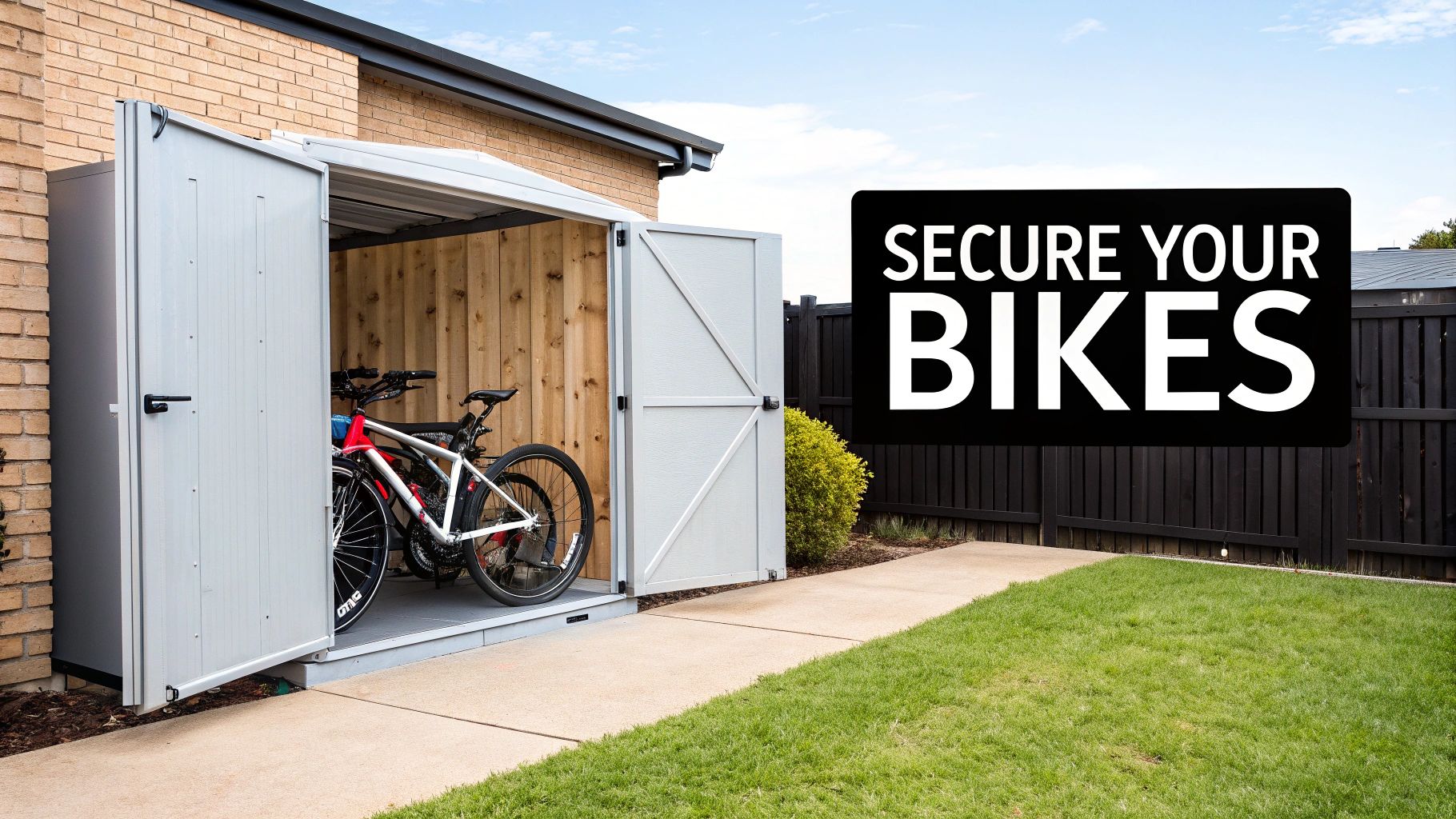
Taking on the Real Risks to Your Bicycles
It’s all too easy to think "it won't happen to me," but the reality of bike theft in the UK is a serious concern. This isn't just a minor worry; it's a massive, widespread problem. In England and Wales alone, a staggering 77,148 bike thefts were reported to the police in a single recent year, which really drives home the scale of the issue. These statistics confirm that a secure bike shed is a necessary defence, not a luxury.
Then there's the weather. The British climate is a constant enemy of your bike's health. Rain, damp, and frost can quickly lead to:
- Rust and Corrosion: Constant moisture is the fastest way to degrade your bike's frame, chain, and other crucial components.
- Component Damage: Water has a nasty habit of getting into delicate gear systems, brakes, and bearings, often leading to expensive repairs.
- Faded Paintwork: It’s not just the rain; prolonged sun exposure can bleach and degrade your bike's paintwork over time.
A purpose-built outdoor bike shed is designed to fight back against all of this, creating a controlled environment that seriously extends the life of your cycles. For a deeper dive, check out our guide on how to securely store and protect your bike.
Choosing the right shed is an investment in your peace of mind. As one of our customers, David from Essex, put it: "Knowing my bikes are locked away in the Bison shed gives me one less thing to worry about. The quality is second to none."
This guide will walk you through everything you need to know to pick the perfect bike shed—from materials and security features to getting the size right and understanding UK-specific regulations.
Key Considerations for Your Bike Shed at a Glance
To make things a bit easier, we've boiled down the most important factors into a simple table. Use this as a quick checklist when you start your search.
| Factor | Why It Matters | Top Priority For |
|---|---|---|
| Material | Dictates durability, security level, and maintenance needs (e.g., steel vs. wood). | Anyone looking for long-term, low-maintenance security. |
| Size & Capacity | Must fit all your bikes comfortably without them scraping against each other. | Families or enthusiasts with multiple bikes of varying sizes. |
| Security | The core purpose! Features like strong locks and anchor points are non-negotiable. | Owners of high-value bikes or those living in high-theft areas. |
| Weatherproofing | Protects against rust, corrosion, and component damage from the UK's damp climate. | Everyone in the UK! This is essential for prolonging your bike's life. |
| Foundation | A solid, level base is crucial for the shed's stability and security. | Anyone installing a shed, but especially for heavier metal models. |
This table gives you a snapshot, but we’ll be exploring each of these points in much more detail to help you make a properly informed decision.
Choosing the Right Material: Metal vs Wood vs Plastic
Picking the right material for your bike shed is probably the single biggest decision you'll make. It’s what separates a genuinely secure, long-lasting investment from a flimsy box that won't stand up to a determined thief or a harsh UK winter. It directly impacts security, durability, and the amount of weekend time you’ll lose to maintenance.
As a British family-run business since 1972, we've seen it all. We know what works and what doesn't when it comes to keeping your bikes safe from both opportunistic thieves and our famously damp climate. Let's get straight into the practical differences between the three main players: metal, wood, and plastic.
Metal Sheds: The Gold Standard for Security and Durability
When bike security is your absolute top priority, nothing comes close to galvanised steel. A well-built metal shed offers a level of protection that other materials just can't replicate. It's the material we trust for our own British-made products because its raw strength is a massive deterrent from the get-go.
Thieves often try their luck with brute force, hoping to kick in a panel or crowbar a door. A thick-gauge steel shed simply laughs off that kind of attack. On top of that, metal sheds are virtually maintenance-free. They don’t rot, warp, or get eaten by pests, and a quality galvanised finish keeps rust at bay for decades. It's genuine, set-and-forget peace of mind, backed by our comprehensive 2-year warranty.
Key benefits of a metal bike shed include:
- Maximum Security: Highly resistant to being forced, cut, or drilled.
- Weather Resistance: Unaffected by driving rain, frost, or harsh sun, keeping your bikes shielded from the elements.
- Low Maintenance: No annual painting or treating is needed. Just a quick wash down now and then.
And what about condensation? Any reputable metal shed is designed with proper ventilation built-in. This keeps the air flowing, preventing moisture build-up and keeping your bikes dry and in top condition.
Wooden Sheds: Traditional Looks, But With a Catch
There’s no denying the classic, natural appeal of a timber shed. It can blend beautifully into any garden. They're a popular choice, but you have to go into it with your eyes open, especially when it comes to security and upkeep.
The biggest weakness of a standard wooden shed is its vulnerability. The thin panels on many off-the-shelf models can be kicked through, and the basic hinges and hasps they come with can be forced with minimal effort. Yes, you can reinforce them, but their out-of-the-box security level is often worryingly low compared to a metal equivalent.
Then there’s the maintenance. Wood needs constant care to survive the UK weather.
To prevent rot and maintain its structural integrity, a wooden shed needs regular treatment with preservatives. Neglecting this maintenance can quickly lead to a weakened structure that offers little protection against thieves or the weather.
If you do have your heart set on wood, looking into various timber cladding options is a smart move. Better quality cladding can improve both weather resistance and overall strength right from the start.
Plastic Sheds: The Lightweight, Low-Security Choice
Plastic sheds, usually made from UPVC, are a breeze to put together and are totally immune to rust. Their lightweight design makes them easy to move and set up, and they need next to no maintenance.
However, that convenience comes at a huge cost: security. Plastic is, by a long shot, the least secure material for an outdoor storage shed for bikes. The panels are often flimsy and can be easily bent back, cut through, or simply smashed open. The locking points are typically weak and offer very little resistance to a thief who means business.
While they keep the rain off, they just don't have the structural strength to provide real protection for bikes worth hundreds, or even thousands, of pounds. They're fine for storing some garden tools, but for high-value bikes, they simply aren't up to the job.
Bike Shed Material Comparison
To make things crystal clear, here’s a straightforward, head-to-head comparison focusing on what really matters for storing your bikes.
| Feature | Galvanised Steel | Timber (Wood) | Plastic (UPVC) |
|---|---|---|---|
| Security Level | Excellent | Poor to Fair (Requires upgrades) | Very Poor |
| Durability | Excellent (20+ years) | Good (With regular maintenance) | Fair to Good |
| Weather Resistance | Excellent | Good (If treated) | Excellent |
| Maintenance | Very Low (Occasional wash) | High (Annual treatment needed) | Very Low |
| Cost | Mid to High | Low to High | Low to Mid |
When all’s said and done, the best material really does hinge on your priorities. But for anyone serious about protecting their bikes from theft and the elements, the sheer strength and low-maintenance durability of galvanised steel make it the clear winner and the smartest long-term investment.
Finding the Perfect Fit: Sizing and Layout
Choosing a bike shed that’s too small is a mistake you’ll regret every single time you try to wrestle a bike out. Let's be honest, it's a frustration you can do without. Getting the size and internal layout right from the get-go is absolutely crucial if you want a shed that’s a genuine asset, not a daily annoyance. It’s about more than just cramming your bikes in; it's about creating a practical, usable space that actually protects your investment.
Before you even glance at shed dimensions, grab a tape measure. Don't just guess the size of your bikes. You need to measure the total length from tyre to tyre and the total width across the handlebars – this is almost always the widest point. Don't forget to factor in anything that adds extra bulk, like pannier racks or chunky child seats.
From Solo Rider to Family Fleet
The number of bikes you own is obviously the biggest factor. A solo cyclist with a single slim road bike has completely different needs to a family juggling a mix of mountain bikes, hybrids, and maybe even a bulky e-bike. Remember, e-bikes are often heavier and longer, demanding a much more generous footprint to get them in and out safely.
It’s also wise to think about the future. Are you planning on adding another bike to the collection in the next year or so? It’s far smarter to buy a slightly larger shed now than to find you’ve outgrown your new one almost immediately.
One of the most common mistakes we see is people only planning for the bikes themselves. You have to leave enough room to comfortably move around inside, grab helmets and pumps, and maybe even carry out some basic maintenance without dragging everything out onto the lawn first.
As a general rule of thumb, consider these minimum internal dimensions:
- 1-2 Bikes: A shed around 6ft wide by 3ft deep is a decent starting point if you're storing them side-by-side.
- 3-4 Bikes: You’ll want to look at something closer to 6ft wide by 4ft deep to avoid a constant battle with tangled handlebars and pedals.
- E-Bikes: Because they're longer and heavier, always add at least an extra foot to your depth calculation. It makes manoeuvring them so much easier.
Planning Your Internal Layout
How you arrange your bikes inside the shed is just as important as the shed's external size. The two main options are horizontal and vertical storage. Horizontal is the most common approach – simply wheeling the bikes in and parking them next to each other. It works well, but it can be a real space-hogger.
For tighter spaces, vertical storage using wall-mounted racks can be a brilliant solution. This gets the bikes up and out of the way, freeing up precious floor space for accessories, tools, or even a small workbench. Just make sure the shed you choose has enough internal height and walls strong enough to support the weight. For more inspiration, check out our guide on clever outdoor bike storage ideas.
The material you choose will also influence your layout options, as this decision guide shows.
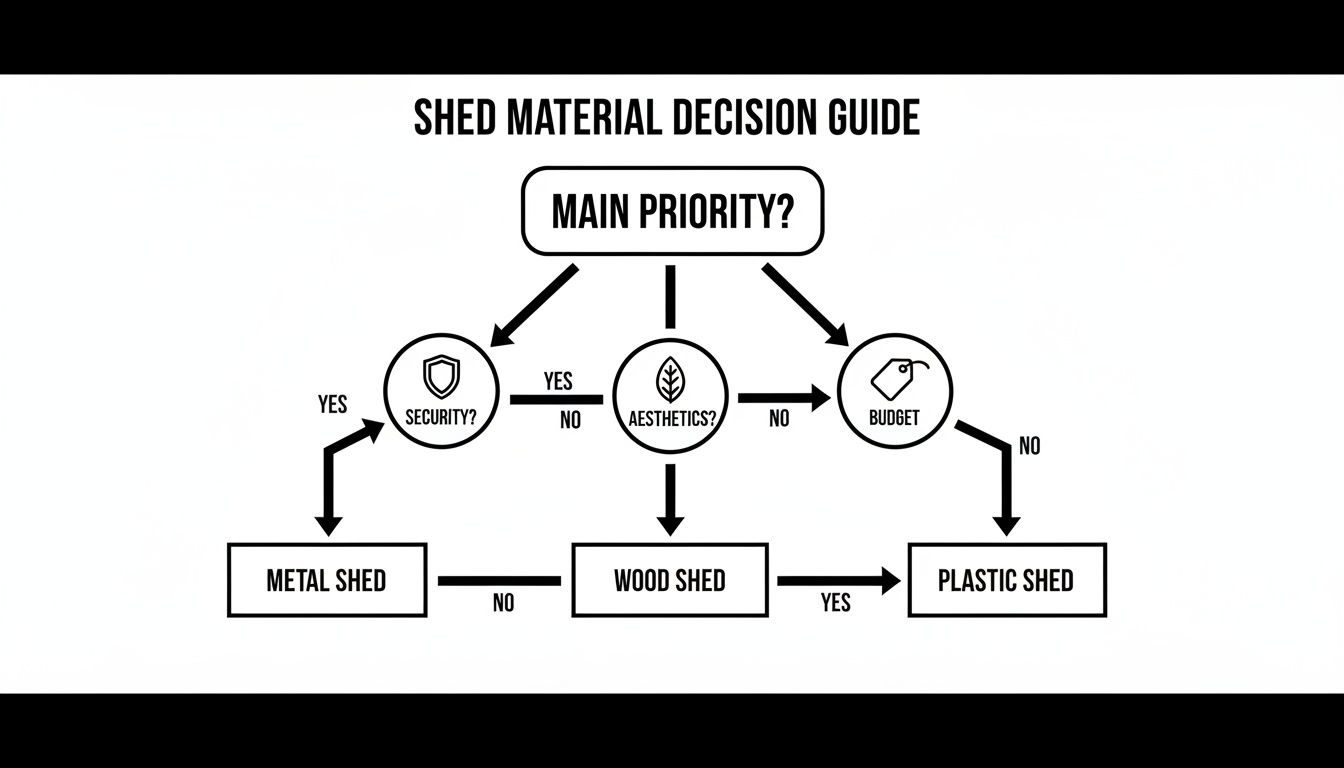
As you can see, if security is your top priority, a metal shed is the clear winner. They also tend to have robust frames that are perfect for mounting internal racks and shelving.
Ultimately, the perfect layout is one that lets you grab the bike you need without having to perform a tricky Tetris-style shuffle with three others first. By taking the time to measure your bikes, plan for your gear, and think through the internal arrangement, you can ensure your new outdoor storage shed for bikes is a practical and protective home for your cycles for years to come.
Building an Impenetrable Bike Fortress
Choosing a shed with the right material and size is a fantastic start, but it’s the security features that truly turn an outdoor storage shed for bikes into a proper fortress. A shed is only ever as strong as its weakest link, so knowing the non-negotiable security features is vital for protecting your valuable cycles. As a family business that’s been focused on security since 1972, we know exactly where thieves look for vulnerabilities.
It's not just about slapping a padlock on the door; it's about having an entire system designed to work together to defeat a determined attacker. This means looking beyond the surface and digging into the details of the doors, hinges, and—most importantly—how the whole structure is secured to the ground. Without these core elements sorted, even the thickest steel shed can be compromised.
Locks and Door Construction
The door is almost always the first point of attack for a thief. Let's be honest, a basic, flimsy door with a simple hasp and staple offers about as much resistance as a cardboard box to a crowbar. That’s why you must insist on a shed with robust, reinforced doors built to resist prying and brute force.
Here’s what you should be looking for:
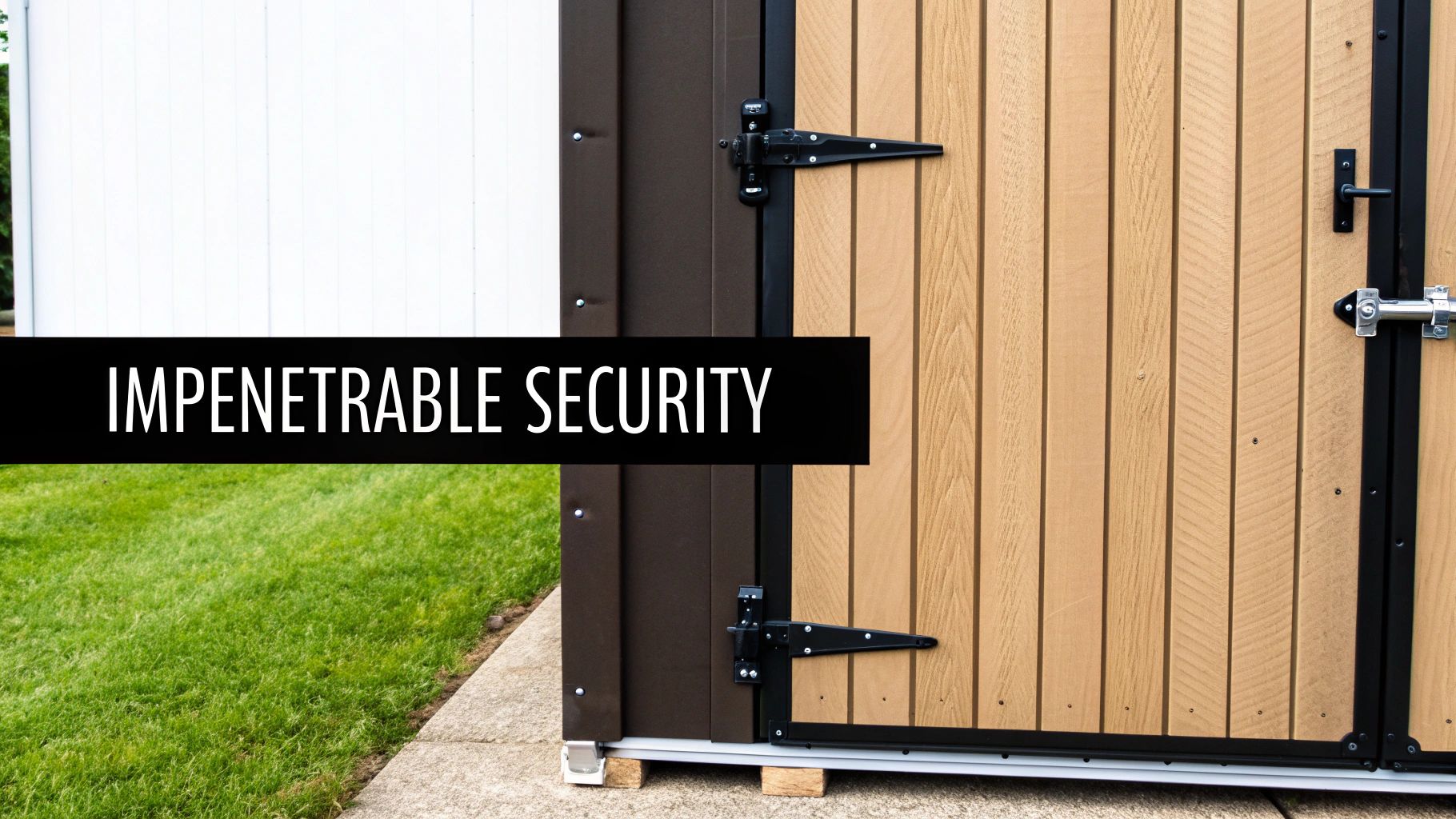
- Multi-Point Locking Systems: Instead of a single padlock point, a high-security shed should have a system that bolts the door shut from the inside at several points, usually the top and bottom. This makes it infinitely harder to pry open.
- Drill and Pick-Resistant Locks: The lock cylinder itself needs to be hardened against common break-in techniques like drilling or picking.
- Reinforced Hinges: Hinges are another classic weak spot. Make sure they are either internal (so they can't be tampered with from the outside) or have security bolts that stop the door from being lifted off, even if a thief manages to remove the hinge pins.
These features transform the door from a simple entry point into a formidable barrier. It sends a clear message to any opportunist that your bikes are not an easy target.
The Critical Importance of Anchoring
Here’s a simple truth many people overlook: if your shed isn't bolted down, it isn't secure. A determined group of thieves can—and will—simply lift a smaller shed or tip a larger one over to get inside. They might even carry the whole thing away. This makes proper anchoring arguably the single most important security step you can take.
An unanchored shed is just a heavy box sitting on your property. Securing it to a solid concrete base is what makes it a permanent, immovable fixture and a true extension of your home's security.
This is why we always, without exception, recommend installing a bike shed on a purpose-laid, solid concrete base. Our professional installation team can handle this for you, ensuring a perfect foundation. You can then use heavy-duty anchor bolts, drilled through the shed's integrated floor or base frame and deep into the concrete. This creates an incredibly powerful connection that foils any attempt to lift, drag, or tip the structure.
Types of Anchoring Kits
When it comes to securing something this valuable, you need bolts that are designed for the job. You'll typically find two main types that are perfect for a bike shed:
- Expansion Bolts: You drill a hole into the concrete, insert the bolt, and as you tighten it, it expands. This creates a powerful, friction-based grip inside the concrete.
- Chemical Anchors: This method involves drilling a hole and filling it with a special resin before inserting a threaded stud. As the resin cures, it forms an unbelievably strong, stress-free bond with the concrete.
Both methods provide excellent security. The key is to make sure the bolts are long and thick enough to provide a seriously strong hold. If you're building a new bike shed, understanding how to create a stable frame is essential; a good place to start is learning about framing exterior walls, as the principles of building a rigid structure are very similar.
By combining reinforced doors, a multi-point locking system, and a rock-solid anchoring system, you create powerful layers of defence. For extra peace of mind inside the shed, our guide to bike racks for the home has some great ideas for securing the bikes internally, adding yet another barrier for any would-be thief to overcome.
Protecting Your Gear from British Weather
Getting your security right is a massive first step, but let's be honest, thieves are only half the battle here in the UK. Our famously damp and unpredictable weather is a constant threat to your bikes. A proper outdoor storage shed for bikes has to do more than just lock; it needs to create a stable, dry home to fend off rust, corrosion, and long-term damage to your components.
Protecting your investment really just means keeping the elements firmly on the outside. This is where high-quality weatherproofing becomes non-negotiable. A well-designed shed isn't just a box; it's a carefully engineered shelter. You should be looking for features like integrated guttering that channels rainwater away from the base, stopping it from pooling and seeping upwards into the shed.
On top of that, robust, weatherproof seals around doors and panel joints are an absolute must. These create a tight barrier that stops driving rain and wind from sneaking inside, keeping your bike's delicate chain, gears, and bearings safe from moisture.
Understanding Condensation in a Metal Shed
While keeping the rain out is crucial, managing the moisture that builds up inside the shed is just as important, especially with metal structures. You’ve probably seen it before: water droplets forming on the inside of a cold window on a chilly morning. That’s condensation, and it can be a bike's worst enemy.
It all happens when the air inside the shed cools down overnight. Cold air simply can't hold as much moisture as warm air, so it releases the excess water onto the coldest surfaces it can find—which, in this case, are the metal walls and roof of your shed. If you just leave it, this constant dampness can cause more rust and mould than a small leak ever would.
The real key to beating condensation isn't insulation, but ventilation. A constant, gentle flow of air is by far the most effective way to stop moist, warm air from getting trapped and turning into damaging water droplets when the temperature drops.
The Critical Role of Proper Ventilation
This is exactly why any purpose-built metal bike shed worth its salt will have a dedicated ventilation system. These aren't just random holes punched in the side; they are strategically placed vents designed to encourage natural air circulation.
- Airflow is Key: Vents, often tucked away in the gables or along the sides, allow damp air to escape while drawing in drier, fresh air from outside.
- Prevents Stagnation: This continuous cycle stops the air from becoming stagnant and saturated with moisture, which massively reduces the risk of condensation forming in the first place.
- Protects Components: By keeping the inside of the shed drier, proper ventilation helps protect not only your bike's frame but also sensitive parts like brake cables, gear shifters, and any electronic bits and pieces on e-bikes.
Maintaining this dry environment is absolutely vital for the longevity of your bikes. For larger bike collections or even covered public spaces, it's also helpful to understand how different structures work. You can learn a bit more about how design choices impact weather protection in our article on covered bicycle racks. By choosing a shed with solid weatherproofing and smart ventilation, you're making sure your bikes are protected from every angle, ready to ride in perfect nick, whatever the British weather decides to throw at them.
Planning Permission in the UK: What You Need to Know
Right, let's talk about the rules and regulations for putting up a bike shed in the UK. The thought of planning permission can be a bit daunting, but for most people, installing a bike shed is surprisingly straightforward and doesn't involve mounds of paperwork. This is all thanks to what's known as Permitted Development Rights.
Think of these rights as a pre-approved green light from your local authority to make certain improvements to your home, like adding an outbuilding. It’s a common-sense system designed to save everyone time and hassle.
So, What Counts as Permitted Development?
For your new bike shed to fall under these rights, it just needs to tick a few boxes. While it's always smart to double-check with your local council if you're ever in doubt, the rules are generally quite generous.
The main things to keep in mind are:
- Single Storey: The shed can only have one floor. Pretty straightforward for a bike shed!
- Height Limits: There are strict height restrictions. Typically, it can’t be taller than 2.5 metres at the eaves (where the wall meets the roof).
- Location, Location, Location: You can't put it in your front garden, or more officially, "forward of the principal elevation fronting a highway."
- Overall Size: The total space taken up by all your outbuildings, including the new one, must not be more than 50% of the total land around your original house.
As you can see, the vast majority of standard bike sheds will meet these conditions without any trouble. The system is designed to be practical, letting you add vital storage without getting tangled in red tape.
Are There Any Exceptions to Watch Out For?
While permitted development is the norm, there are a few special cases. If your house is a listed building or you live in a Conservation Area, an Area of Outstanding Natural Beauty (AONB), or a National Park, the rules get a lot tighter.
In these situations, it’s absolutely essential to contact your local planning authority before you even think about buying a shed. They’ll give you clear, specific guidance on what you can and can't do.
Making secure bike storage easier to install is a huge step towards encouraging more people to get on their bikes. A lack of safe storage at home is a massive barrier for many, which is why a quality, compliant shed is a must-have for every cyclist.
This is more important than ever as cycling continues to boom. According to a Cycling UK report, a lack of secure storage is a major barrier preventing people from cycling more. You can dive deeper into the UK bike market trends to see just how big the demand is for better driveway protection and cycle storage.
By getting to grips with these simple planning rules, you can get your new shed installed with confidence, knowing your investment is protected and you’re fully compliant.
Your Bike Shed Questions Answered
We know that choosing the right outdoor storage shed for bikes throws up a lot of questions. As a family business that’s been helping customers protect their property since 1972, we’ve heard pretty much all of them over the years. Here are some straightforward answers to the queries that come up time and time again, helping you make that final decision with total confidence.
Do I Need Planning Permission for a Bike Shed in My Garden?
For most people across the UK, the good news is you do not need planning permission for a bike shed. This is because they usually fall under 'permitted development' rights.
Generally, you're in the clear if the shed:
- Is only a single storey.
- Has a maximum eaves height of 2.5 metres.
- Doesn't take up more than half the land around the original house.
However, things can get a bit stricter if you live in a conservation area or a listed building. If you have any doubt at all, the wisest move is always a quick call to your local council to check.
How Do I Stop My Metal Bike Shed from Getting Condensation Inside?
Condensation is a common worry, but it's something a well-designed shed can easily handle. The single most important factor here is proper ventilation.
A quality metal bike shed is built with a ventilation system that lets air circulate constantly. This clever design stops warm, moist air from getting trapped and turning into water droplets on the cool metal surfaces. On top of that, installing your shed on a solid concrete base with a damp-proof membrane underneath makes a massive difference, stopping moisture from rising up from the ground.
Is a Steel Bike Shed Better Than an Aluminium One?
While both materials are fantastically durable, they have slightly different strengths. Steel is much heavier and stronger, giving you the ultimate resistance against brute force attacks – that’s why it's our top choice for high-security storage. Aluminium, on the other hand, is lighter and naturally corrosion-proof.
Here at Bison Products, we choose to make our sheds from high-grade, galvanised steel. We've found it provides the perfect balance of serious strength, long-term weather resistance, and fantastic value for our customers.
What Is the Best Way to Secure a Bike Shed to the Ground?
There's really only one truly secure method: bolting the shed directly into a solid concrete base. A shed that isn't properly anchored is a weak link; a determined group of thieves could potentially lift it or tip it over to get inside.
We can't stress this enough – use heavy-duty anchor bolts, drilled right through the shed’s integrated base frame and deep into the concrete. This process creates a permanent, immovable fixture, turning your shed into a genuine fortress and giving you complete peace of mind.
At Bison Products, we manufacture British-made security solutions designed to last. Our heavy-duty metal bike sheds provide the ultimate protection for your valuable cycles, with professional installation available across the UK.